A Competitive Advantage
My experience using CABINET VISION
By Prue Talbot, Planit Business Development Manager
As kitchen designers, we spend much of our time balancing creativity with practical reality. A kitchen can look fantastic in a render, but the real test is whether the design works for the client, can be clearly communicated to everyone involved and can ultimately be built as intended. That is where CABINET VISION has become an important part of my design process.
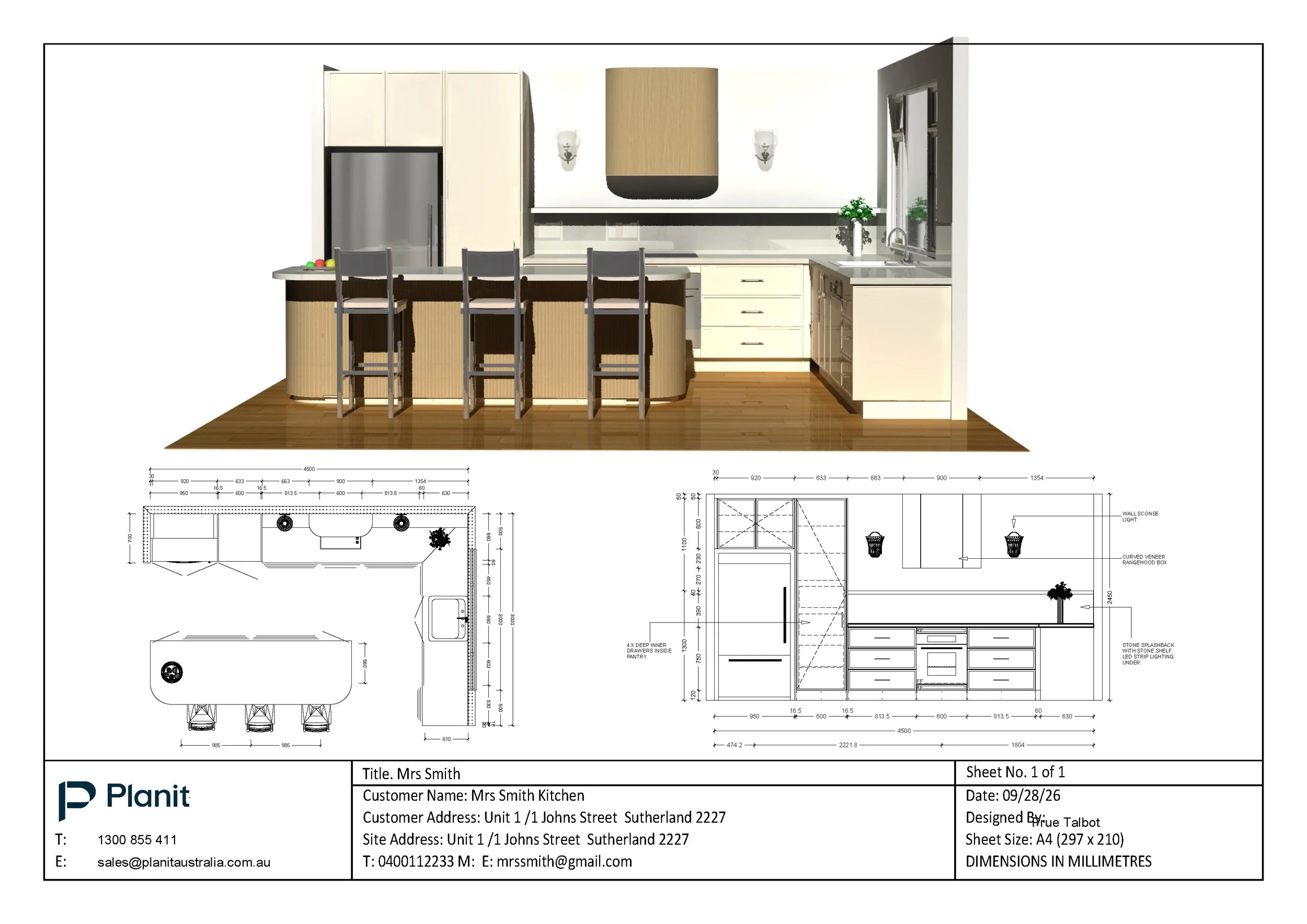
One of the biggest advantages is being able to take an initial concept and develop it into a detailed 3D design. Clients often know what they like, but putting those ideas into words or imagining them from a floor plan can be difficult. With CABINET VISION, I can show them how the space could look and function before anything is manufactured.
That changes the design conversation. Instead of asking a client to imagine the finished kitchen, we can explore the design together. Cabinet layouts, appliances, finishes, proportions and details can be considered visually, making it easier to refine the design and make decisions with confidence.
For me, accuracy is equally important. Kitchen design involves hundreds of details, from dimensions and cabinetry to appliance clearances and construction requirements. CABINET VISION helps bring these elements together within the design, allowing potential issues to be identified earlier in the process. Making a change during design is considerably easier than discovering a problem once manufacturing or installation has begun.
It also improves communication. A kitchen project rarely involves just the designer and client. Cabinetmakers, manufacturers, installers and other trades all need to understand what has been designed. Detailed drawings and documentation provide a common reference point, helping translate the design concept into something that can be manufactured and installed.
It can also create a professional client experience, giving designers a stronger platform for presenting ideas and demonstrating the thinking behind every decision. But technology is only part of the equation.
I still believe the designer is at the heart of a successful kitchen. Understanding how a client lives, how they use their space and what will make the kitchen feel right requires creativity, experience and attention to detail. CABINET VISION doesn't replace those skills, it gives designers a powerful way to develop and communicate them.
That combination is what I find most valuable: creative thinking supported by practical functionality and technical accuracy. For designers considering how technology could improve their workflow, CABINET VISION is worth exploring. Seeing a project move from an initial idea through detailed design and documentation can change the way you approach the entire process.
And you don't necessarily have to commit before experiencing it.
The CABINET VISION Discovery Program gives designers an opportunity to explore the complete design workflow over three months, learn at their own pace and understand how the software could fit into their own business. For me, the value of CABINET VISION is ultimately simple: it helps turn good ideas into well-considered kitchens and gives both the designer and client greater confidence in the journey from concept to completion.